Wednesday, November 20, 2013

Caves & Adventure in the Hidden Northeast

Intro: Modoc County 


Modoc County, tucked away in the far northeast corner of California, is a high desert landscape of agricultural plains, ancient lava flows, juniper flats, pine forests, volcanic mountains, valleys, and and lakes. Native American tribes, including the Modoc, have lived here for literally thousands of years. Alturas, a small Old West town that now serves as the county headquarters, sits on the Pit River. Despite its abundance of wilderness, recreational opportunities, and resplendent natural beauty, tourism is not a major sector of the local economy - largely due to the region's remote location.


Destination: Lava Tube Caves


30,000-40,000 years ago the Medicine Lake Volcano was actively flowing lava, which formed most of the lava tube caves in the Lava Beds National Monument. As the hot lava flowed downhill, the top cooled and crusted over, insulating the rest of the lava and forming tubes wherein lava continued to flow. Lavacicles on the ceiling of a lava tube were left as the level of lava in the tube went down and the lava on the ceiling dripped as it cooled.

Today, the volcano has long dried up and only the tube caves remain. Lava Beds National Monument has the largest concentration of lava tube caves in North America. Some, such as Sunshine Cave, are partially collapsed and are illuminated by sunlight; one cave (Mushpot Cave) has electrical lighting, while the other caves require hard hats and flashlights, available to borrow from the Visitor's Center. There are over 25 caves mapped and open for visitor exploration.
Sunshine Cave

Ice Cave


Mushpot Cave

High desert above the lava tube caves with Cascade mountains in the distance


Schonchin Butte Lookout 


Skull Cave 


Sunset at Lava Beds Campground


Night sky in Modoc County high desert

Friday, November 23, 2012

Dream trip to Chiapas, Mexico

Chiapas is located on the western (Pacific Ocean) side of the Yucatan Peninsula in southern Mexico. 

It is the home of the ancient Mayans, with cloud forests, alpine lakes, highland valleys, and lowland jungle.  There is a lot to see - colonial towns, ancient Mayan ruins, waterfalls, lakes, unique flora and fauna, and the largest population of indigenous people in Mexico - many still living the traditional way of life. 


  • 1) Fly in to Tutla Gutierrez from SFO, via Mexico City.


  • 2) Go boating in the Sumidero Canyon, a deep narrow canyon formed by the Grijalva River - just north of Tuxtla Gutierrez, Chiapas.

     
    Photos of Sumidero Canyon, Chiapas
    This photo of Sumidero Canyon is courtesy of TripAdvisor


  • 3) From Tuxtla, rent a car or take a comfy ADO bus to San Cristobal de las Casas, an hour or two from Tuxtla in the highland mountains of Chiapas. San Cristobal de las Casas Photos
    This photo of San Cristobal de las Casas is courtesy of TripAdvisor

  • 4)  You can go on a biking tour in the highlands near San Cristobal! There are traditional villages, old churches and colonial architecture, and beautiful scenery.
San Cristobal de las Casas Photos
This photo of San Cristobal de las Casas is courtesy of TripAdvisor

  • 5) Chiapatecan cuisine in San Cristobal:
  • Photos of El Caldero, San Cristobal de las Casas
    This photo of restaurant El Caldero is courtesy of TripAdvisor
Photos of TierrAdentro, San Cristobal de las Casas
This photo of restaurant TierrAdentro is courtesy of TripAdvisor
     
  • 6) Head to Agua Azul and Las Nubes waterfalls near San Cristobal and Ocosingo.
Photos of Cascadas de Agua Azul, Palenque


  • 7) Visit Palenque - spectacular city of the Mayans from 500-800AD! Set in the jungle, the ruins are supposed to include amazingly well-preserved examples of Mayan sculpture and architecture. 
Palenque Photos
This photo of Palenque is courtesy of TripAdvisor

Palenque Photos
This photo of Palenque is courtesy of TripAdvisor


  • 8) Bonampak - home to the world's most important and complete Mayan mural paintings.  The discovery of these murals, and the images within them, changed the way historians understood the Maya - no longer as an ancient spiritual people governed by peaceful astronomer-priests and royalty, but as more complex, warlike people who sometimes practiced ritual sacrifice and tortured their prisoners.


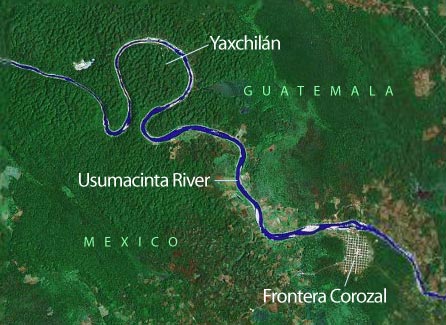
  • 9)  Yaxchilan - another ancient Mayan city located deep in the jungle, on a tight bend of the Usumacinta River, close to the Guatemalan border.  You can only get there by river boat, and when you arrive there are ruins, enormous carved lintels (stelae) and thick jungle that is supposed to be full of howler monkeys and toucans.


***Note to self: AVOID THESE DORKS WHILE BOATING TO YAXCHILAN***


***2nd note to self: MAKE FRIENDS WITH TOUCAN IN YAXCHILAN***


  • 10) After a few days of hiking through jungle-tangled ruins, and up and down hundreds of pyramid stairs, it will be time to relax - at Lagos de Montebellos, an area of nearly a hundred lakes, each one a unique color.


  • 11) Zip-line at El Chiflon, one of the biggest waterfalls in Mexico!
  • 12) Head back to bohemian art scene hub San Cristobal de las Casas to wind down the trip and do lots of art and souvenir shopping.


  • 12) Finish up the trip in Tuxtla Guttierez and head home!

Thursday, March 03, 2011

Jaisalmer


On the eastern edge of Rajastan, 150km of desert between it and the border of Pakistan, is the ancient fort town of Jaisalmer. Jaisalmer felt as deeply Rajastani as we could find. The fort of Jaisalmer, built of golden sandstone with intricately carved and decorated exteriors, is thought to be the oldest "living" fort in the world; the palace is now a museum but hundreds of residents, as well as plenty of barnyard animals, still live inside the fort's high walls and narrow streets. With plenty of plush fabrics, furniture, and antiques for sale all around you, walking through the fort and the bazaar below feels you've been transported into the pages of 1,001 Arabian Nights. And, if you feel like you need some extra help to get your mind in the right frame, you can pay a visit to the government-authorized bhang shop! Bhang is basically fine powder of pounded cannibis that can be served mixed into lassis (smoothies), or in cookies, chocolate, and other treats. Bhang is traditionally consumed by Hindus on special holidays, but obviously now has mass appeal for tourists -- it's totally legal, and inexpensive! At the bhang shop in Jaisalmer, you can buy special "camel packs" -- a sampling of all the bhang treats to take on your camel safari. But if you come to Jaisalmer just looking for a bhang lassi and a camel safari, you'll miss out on the real magic. You need to give yourself a few days of just wandering around and taking in all the atmospheric streetlife of a place that truly lives up to the image outsiders have of Rajastan. This is a place where you feel like you've really travelled deep into India! Weeks after we left, whenever we found ourselves stuck somewhere where the honking, insanely chaotic traffic, pushy crowds and smelly trash heaps had pretty much obliterated the atmosphere of India, we found ourselves wishing we could just go back to Jaisalmer.